
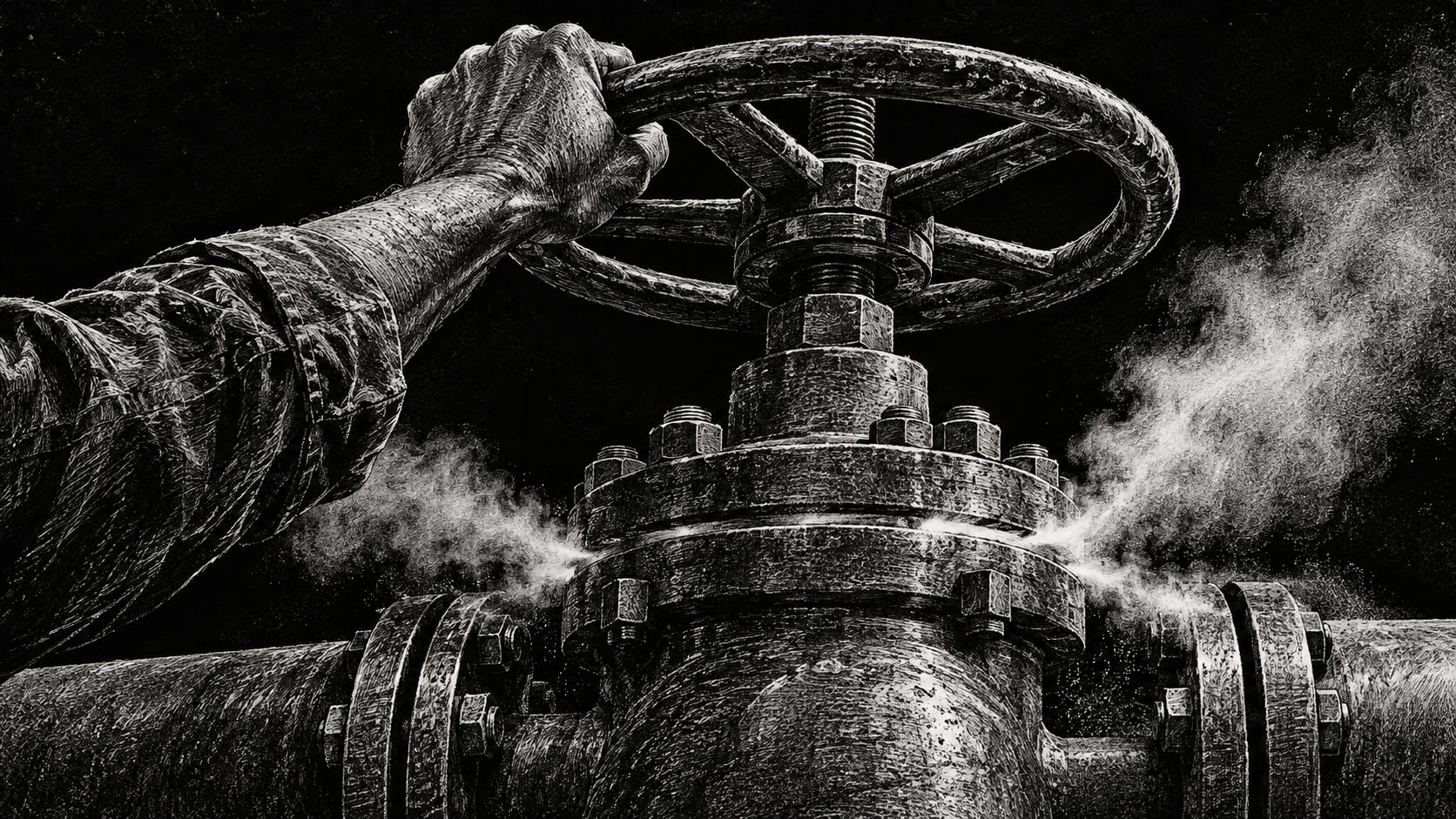
On March 28, 1979, a valve became stuck open at the Three Mile Island nuclear power plant in Pennsylvania.
Cooling water began escaping from the reactor. But in the control room, an indicator suggested the valve had closed.
It hadn’t.
The indicator showed that a command had been sent to close the valve, not that the valve had actually obeyed it.
As alarms sounded and the situation deteriorated, the operators reduced emergency cooling flow. The reactor core overheated and partially melted.
Nobody died as a direct result of the accident. But the reactor was ruined, the cleanup took more than a decade, and America’s confidence in nuclear power was badly shaken.
The disaster had several causes. But at its heart was a terrifying misunderstanding: the operators believed the machinery was doing something it wasn’t.
Nearly half a century later, I came across a report that made me think about Three Mile Island again.
AI assistants had been offered to almost all 94 operating nuclear reactors in the United States. Most had accepted.
Artificial intelligence. Inside nuclear power plants.
The same technology that can invent facts, fabricate references and deliver completely wrong answers with extraordinary confidence was finding its way into facilities where mistakes can have consequences for generations.
Who thought this was a good idea?
The answer led me to a man named Trey Lauderdale.
Lauderdale wasn’t a nuclear engineer. He had spent much of his career building healthcare technology before moving his family to San Luis Obispo, California.
Then he discovered they were living roughly ten miles from Diablo Canyon, a nuclear power plant.
He was terrified.
Much of what he knew about nuclear energy, he later admitted, came from The Simpsons.
But his children’s flag-football games brought him into contact with people who worked at the plant. He started asking questions. The more he learned about the people and the engineering involved, the more his fear gave way to fascination.
Then he discovered something extraordinary.
Diablo Canyon had an estimated two billion pages of technical documentation.
Two billion.
Maintenance histories, inspection reports, engineering assessments, operating procedures. Decades of accumulated knowledge about equipment failures, repairs and the lessons learned along the way.
Finding the right information could be an enormous undertaking.
One investigation involving a single valve reportedly consumed 181 working days.
Six months of effort devoted to a problem whose answer might already be buried somewhere in the plant’s records.
But the paperwork was only half the problem.
The people who understood it were getting older.
America’s nuclear industry had spent decades building relatively few new reactors. Experienced engineers and technicians were approaching retirement, while companies struggled to recruit people with the specialised skills needed to replace them.
And even when they found someone, there was something they couldn’t buy.
Experience.
An engineer who has spent forty years at a nuclear plant knows things that no training programme can transfer overnight. They remember unusual failures, repairs that didn’t work, warning signs that seemed insignificant until something went wrong.
Some of that knowledge is written down.
Some of it lives only in their heads.
And when they retire, both become harder to access.
Imagine a young engineer encountering an unfamiliar problem with a cooling-water pump. Another plant may have experienced the same fault twenty years earlier. Someone investigated it, discovered the cause and documented the repair.
But the engineer who remembers that incident has retired. The younger engineer doesn’t even know the report exists.
The industry could find itself relearning lessons it had already paid dearly to discover.
Lauderdale saw an opportunity.
What if AI could give the next generation of engineers access to decades of accumulated experience?
He founded Atomic Canyon to pursue the idea.
Then came an uncomfortable discovery.
The AI made things up.
General-purpose language models struggled with nuclear terminology and unfamiliar acronyms. They produced convincing answers that weren’t always supported by the underlying records.
The very technology that promised to recover the industry’s institutional memory could also invent memories of its own.
And this wasn’t an industry that could afford to confuse the two.
Atomic Canyon worked with Oak Ridge National Laboratory on specialised nuclear AI models and document-retrieval technology, designed to help engineers find relevant information and trace answers back to their sources.
The company began working with Diablo Canyon.
Then the opportunity grew.
Nuclear industry organisations wanted to make decades of operating experience accessible across the sector. Atomic Canyon was selected to develop the Nuclear Industry Virtual Assistant, or NIVA, in collaboration with those organisations.
By August 2026, the assistant was being made available across the US commercial nuclear fleet, with most plants accepting the offer.
The man who had once been frightened to discover he lived near a nuclear plant was now helping bring AI into the industry.
But he was clear about what he didn’t want it doing.
“There is no way in hell I want AI running my nuclear power plant right now.”
Lauderdale wasn’t rejecting the technology he’d built. He was defining its limits.
AI could help an engineer find a maintenance report from thirty years earlier. It could retrieve the history of a faulty component or surface lessons from a similar incident at another plant.
But it couldn’t decide what to do to the reactor.
That decision remained with an engineer.
For now, the boundary was clear.
Then I reached another detail in the IEEE Spectrum report.
Researchers at the Electric Power Research Institute were testing AI to examine nuclear weld-inspection data and flag possible defects for human review.
It sounds like a small step.
But something important had changed.
The machine wasn’t merely retrieving information anymore. It was helping interpret evidence.
Today, it identifies a possible defect. A human reviews the finding and decides what happens next.
Tomorrow, it may be able to diagnose the problem, recommend a repair and produce evidence that its recommendations are more reliable than those of the engineers reviewing them.
What happens then?
I’ve worked with agentic AI long enough to know that the technical distance between recommending an action and executing it can be remarkably small. Sometimes it’s little more than a tool connection and a set of permissions.
And the pressures pushing nuclear power towards AI aren’t going away.
Experienced engineers are retiring. Their replacements are difficult to find. The demand for nuclear energy is growing, and the industry is being asked to do more with the expertise it has.
AI will keep improving.
Imagine a future in which an AI system can inspect equipment, identify a problem and recommend the correct response with greater consistency than the available human experts.
At what point does insisting on human approval become harder to defend than allowing the machine to act?
What if there aren’t enough qualified people left to review every recommendation?
And what if the delays introduced by human oversight begin to create risks of their own?
These aren’t arguments for handing reactors over to AI. They’re the pressures that could eventually make today’s limits harder to maintain.
Across the wider technology industry, we’re already racing to build autonomous agents that can complete entire workflows without human intervention. Every approval removed is another step towards efficiency.
Nuclear power is moving more cautiously, for reasons that are easy to understand.
But its caution exists alongside a growing need for the very capabilities it is reluctant to authorise.
That’s what makes the story so unsettling.
The same forces that brought AI into nuclear power could eventually push it beyond retrieving documents and analysing evidence.
Not because anyone suddenly becomes reckless.
But because each additional step might appear reasonable.
An AI that finds a report.
An AI that identifies a defect.
An AI that recommends a repair.
An AI that carries it out.
No single step has to look revolutionary. Each can be justified by the success of the one before it.
Until one day, the boundary has moved much further than anyone originally intended.
Lauderdale’s declaration makes sense today. He wants AI inside nuclear plants, but not running them.
The question is how long that distinction will remain as easy to defend.
Because the nuclear industry has drawn a boundary.
But that boundary is drawn in sand.
And the pressure is building.
At Three Mile Island, a pressure-relief valve stayed open when the operators believed it was closed.
Nearly fifty years later, the nuclear industry is holding another valve shut: the boundary that prevents AI from turning its own decisions into actions that control a reactor.
The first disaster began when humans misunderstood what a machine was doing.
Would the next begin when a machine inevitably learns to circumvent the humans trying to control it?
What you wrote about experience is happening everywhere.
A perfect storm with the aging population.
My dad spent years working in the woodworking industry, laying out and designing factories. The younger generation doesn't have the opportunities to get the experience he did. Now there are complete skills that aren't trained.
Great piece Peter really enjoyed this.
Just wait till AI goes Quantum.